
Published: May 21, 2026
By: Yanwei Hu, Technical Expert at Cymber Metal
Good morning everyone,
Yanwei Hu here from Cymber Metal.
Two weeks ago I got an urgent call from a data-center EPC contractor in Singapore. Their 2 MW busbar trunking system was failing thermal imaging tests at 45 % load — hot spots hitting 118 °C on the joints while the design predicted 78 °C.
The culprit? Electrical copper plate specified as “C11000, 6 mm thick, half-hard.” What actually arrived was 5.7 mm nominal thickness with 0.4 mm variation across the width, plus residual rolling lubricant that created micro-contact resistance at every bolted joint.
In 2026, with data centers, EV charging hubs, and offshore wind substations pushing current densities past 4 A/mm², these small deviations no longer stay small. They turn into megawatt-hour losses and unplanned outages.
Today I’m breaking down the five non-negotiable parameters every electrical engineer must lock down when specifying high-conductivity copper plate for busbar assemblies — and exactly how Cymber Metal’s integrated model removes the risk.
Why Electrical Copper Plate Quality Decides Busbar Performance
Busbar assemblies are the circulatory system of any high-power installation. Copper plate (typically 3–12 mm thick) is the backbone for rigid busbars, laminated packs, and custom profiles because it offers the best combination of conductivity, mechanical strength, and ease of punching/bending.
The problem in 2026 is that “electrical copper plate” has become a marketing term. Many suppliers deliver material that meets basic purity but fails in real assembly conditions.
The 5 Core Parameters You Must Specify in 2026
1. Conductivity & Purity (The Non-Negotiable Baseline)
- Minimum 100 % IACS at 20 °C (58 MS/m)
- UNS C11000 (ETP) or C10100 (OF) — never generic “electrical copper”
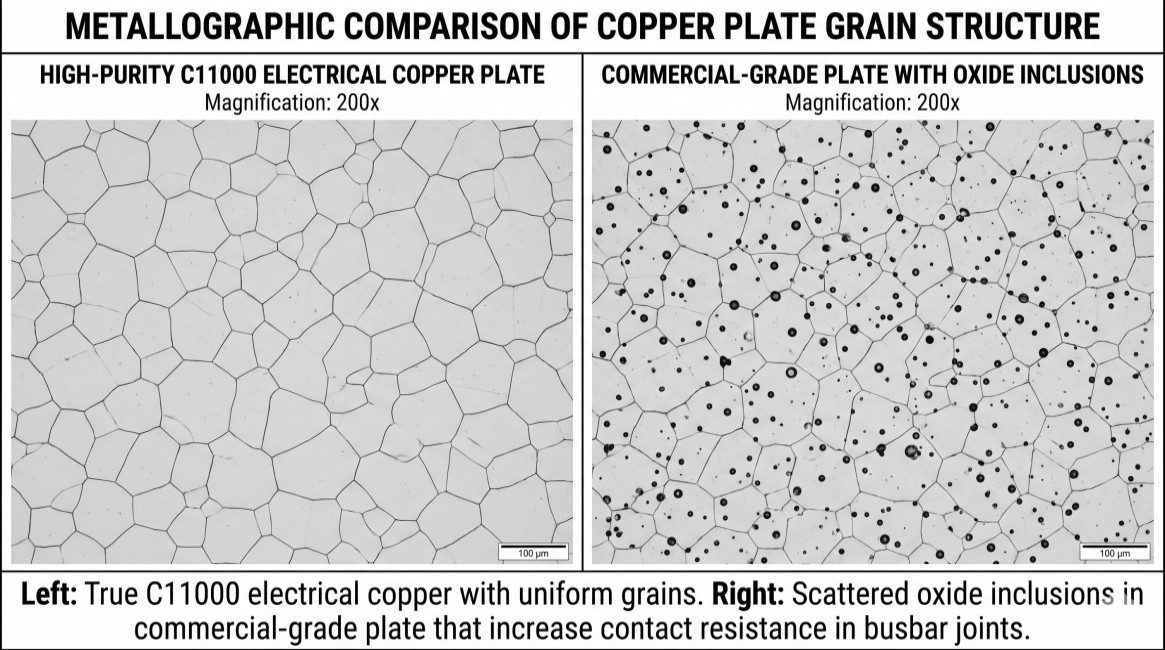
- Oxygen content ≤30 ppm for ETP; ≤10 ppm for true oxygen-free grades used in vacuum or hydrogen-brazed joints
Anything below 98 % IACS creates measurable I²R losses that compound across hundreds of meters of busbar.
2. Thickness Tolerance & Flatness
- Standard tolerance: ±0.10 mm for 3–6 mm plate; ±0.15 mm for thicker sections
- Flatness: ≤0.5 mm/m deviation (critical for laminated busbar packs)
A 0.3 mm thickness variation across a 400 mm wide plate creates uneven pressure distribution in bolted joints — exactly what caused the Singapore hot spots.
3. Temper & Mechanical Properties
- H02 (half-hard) is the sweet spot for most busbar work — good strength with enough ductility for bending without cracking
- H04 (hard) for high-vibration environments
- Avoid H00 (annealed) unless you need maximum formability — it springs back too much during punching
4. Surface Condition
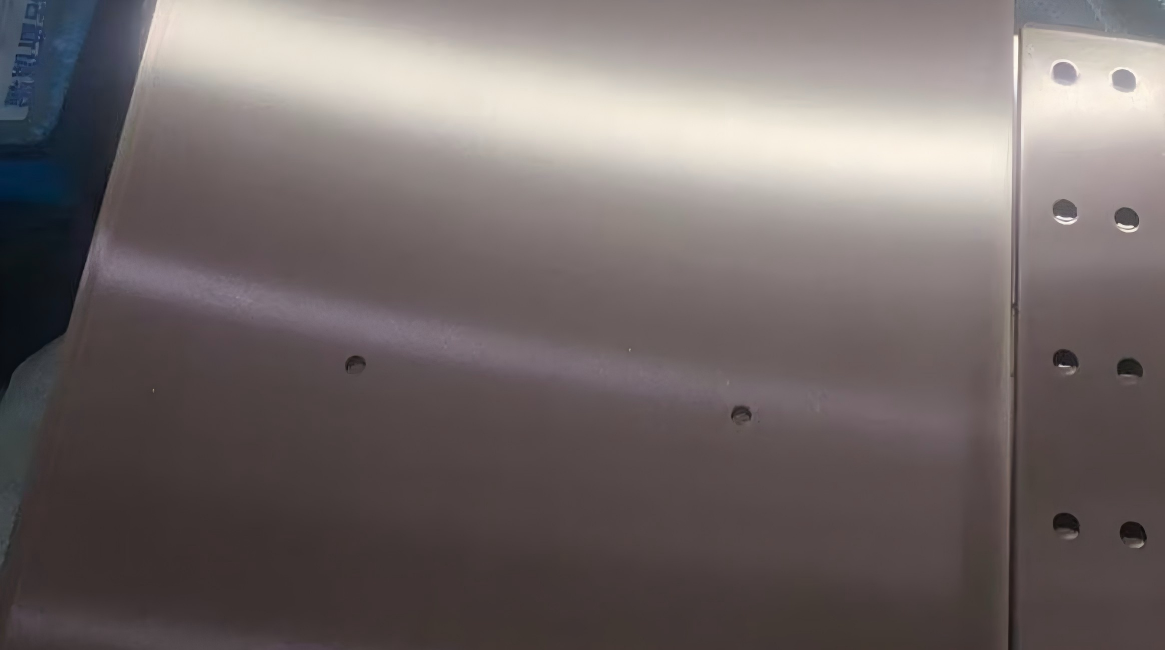
- Bright, oxide-free, free of rolling lubricant or protective oil residue
- Ra ≤ 1.6 μm for contact surfaces
- Any residual film increases contact resistance by 15–30 % and accelerates oxidation under load
5. Edge Condition & Burr Control
- Sheared or laser-cut edges must be deburred to <0.1 mm
- Burrs create stress risers and can pierce insulation during lamination
-
Common 2026 Procurement Traps We See Weekly
- Plate sold as “electrical grade” that is actually 99.7 % pure with 80–120 ppm oxygen
- Thickness variation hidden inside the mill tolerance band
- “Half-hard” material that is actually quarter-hard — causing excessive spring-back and joint misalignment
- Surface oil that was never removed before coating or insulation
-
Why Cymber Metal’s Model Gives You an Unfair Advantage
Most distributors still work on a “catalog + mill order” basis. When you need 12 tons of 8 mm C11000 plate with tight flatness for a data-center busbar run next month, they quote 8–12 weeks.
Cymber Metal operates differently:
- 3,200-ton self-owned spot warehouse in Jiangyin holding real electrical copper plate in 3–12 mm thicknesses, multiple tempers, and full traceability
- CYMBER Busbar Fabrication Workshop that laser-cuts, punches, bends, plates (tin/silver/nickel), insulates, and assembles complete busbar systems from the same facility
- Full in-house capability from raw plate to finished, tested busbar trunking — no second vendor, no coordination delays
You can check current stock levels and warehouse locations here: CYMBER Ready Stock Warehouses
See exactly how we turn electrical copper plate into finished busbar assemblies here: CYMBER Busbar Fabrication Workshop
Last quarter we delivered 28 tons of verified C11000 and C10100 electrical copper plate plus finished busbar systems to three major data-center projects with an average lead time of 11 calendar days — including full MTR, SGS batch test, and custom flatness certification.
-
Our Complete Pure Copper Product Range
All pure copper products are available from the same integrated supply chain:
- Pure Copper Plates & Sheets
- Pure Copper Rods & Bars
- Pure Copper Strips & Coils
- Pure Copper Busbars (standard & plated)
- Pure Copper Square Bars
- Custom Extruded Pure Copper Products
- Custom Machined Pure Copper Parts
-
Practical Specification Checklist for Electrical Engineers
Parameter Recommended Spec for Busbar Use Why It Matters UNS Grade C11000 (ETP) or C10100 (OF) Maximum conductivity + traceability Thickness Tolerance ±0.10 mm (3–6 mm); ±0.15 mm (6–12 mm) Even joint pressure, no hot spots Flatness ≤0.5 mm/m Laminated pack alignment Temper H02 (half-hard) — most common Balance of strength and formability Surface Finish Bright, Ra ≤1.6 μm, oxide-free Lowest contact resistance Certification Full MTR + SGS batch test + heat/lot traceability Incoming inspection passes first time 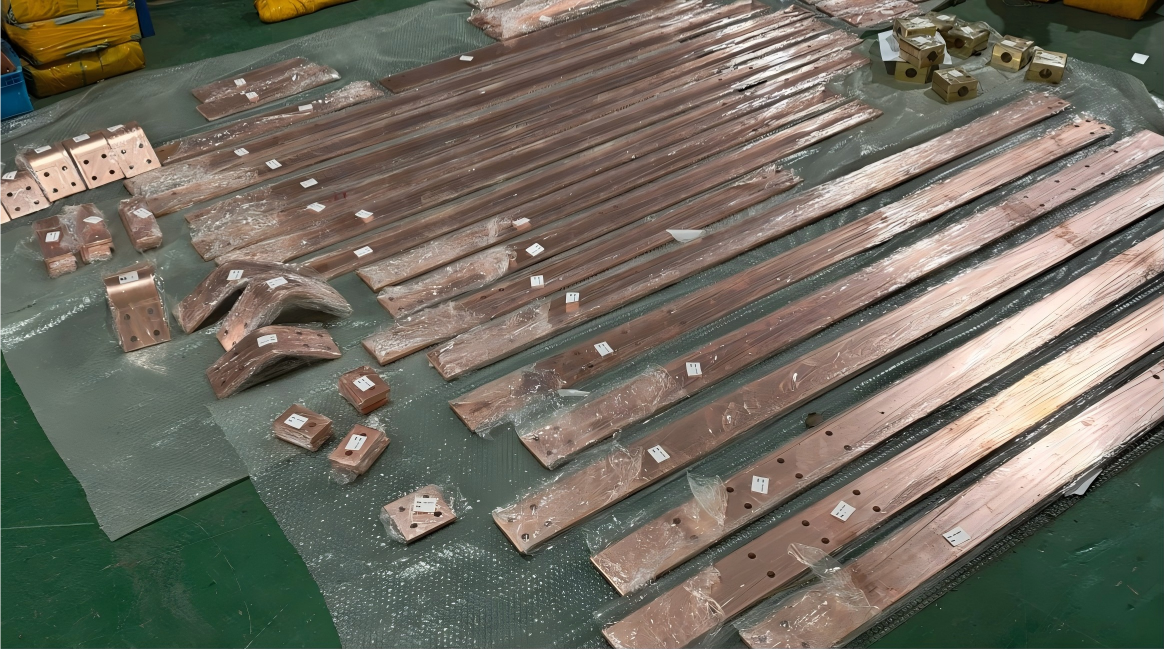
Final Thoughts
In 2026, busbar reliability is no longer about “good enough copper.” It is about specifying and receiving electrical copper plate that actually matches the physics of high-current, high-reliability systems.
The engineers who win are the ones who treat every parameter as measurable and verifiable — and who partner with a supplier that holds real inventory and can turn it into finished assemblies without multi-vendor delays.
Cymber Metal’s 3,200-ton warehouse + integrated CYMBER Busbar Fabrication Workshop + full pure copper product range was built for exactly this reality. When your project timeline cannot absorb another 10-week wait, or when a 2 % conductivity shortfall will cost you hundreds of thousands in energy losses over 20 years, we are the partner who can move verified electrical copper plate from warehouse floor to your loading dock in days.
Ready to specify with confidence?
Send us your busbar drawing, required thickness, temper, quantity, and any plating or insulation requirements. We’ll confirm physical stock, exact parameters, and a committed ship date in one reply.
Download 2026 Electrical Copper Plate Busbar Specification Checklist (PDF)
Post time: May-21-2026