
Published: February 25, 2026
By: Zhen Liu, Pure Copper & High-Strength Copper Alloys Technical Expert at Cymber Metal
Hello everyone, Zhen Liu here — the copper alloys specialist at Cymber Metal.
Over the past few years, I’ve helped many customers decide between pure copper and Chromium Zirconium Copper (CuCrZr / C18150). Both are excellent materials, but they serve very different needs. Pure copper gives you the absolute best conductivity, while CuCrZr trades a little conductivity for significantly higher strength, heat resistance, and wear performance.
In 2026, with EV motors, resistance welding, and high-power industrial systems demanding more from materials, the right choice can save you cost, improve reliability, and extend service life. In this guide, I’ll share a clear, practical comparison based on real projects we’ve run at Cymber Metal — including advantages, disadvantages, and how to decide which one is best for your application.
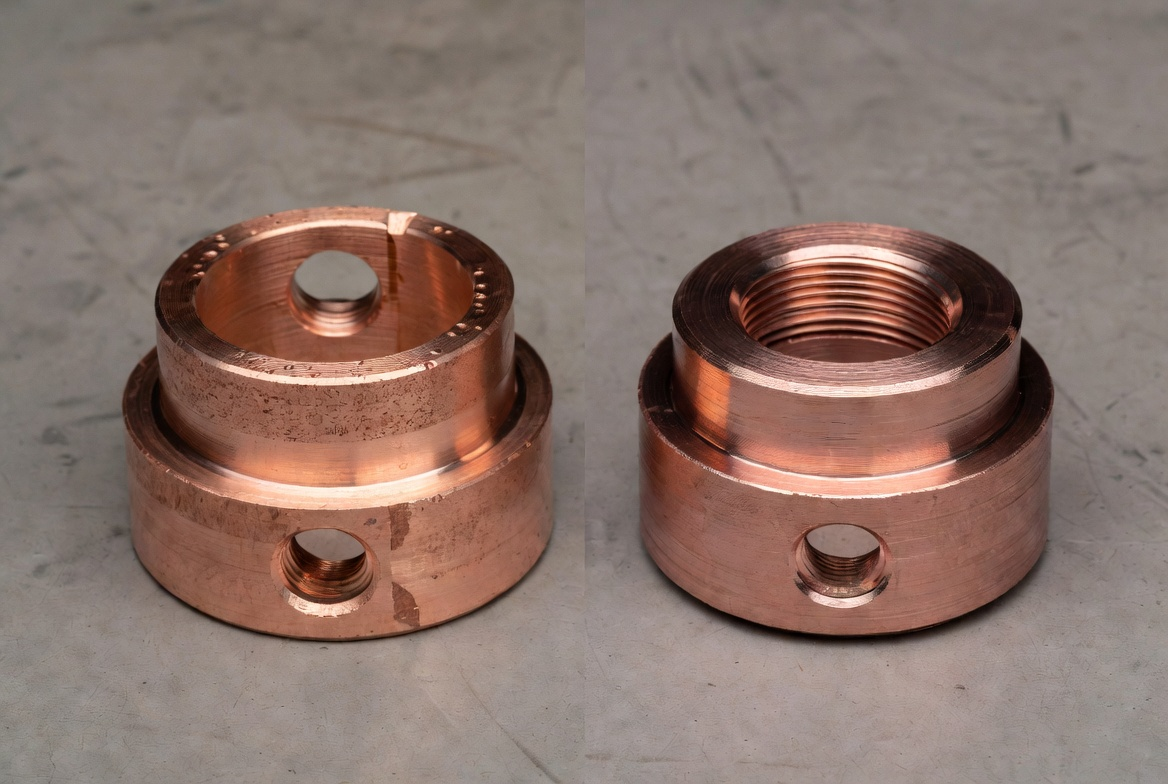
Direct Comparison: Pure Copper vs Chromium Zirconium Copper
Here’s the practical table we use when customers ask us to recommend the right material:
| Property | Pure Copper (C10100 / C11000) | Chromium Zirconium Copper (C18150) | Winner for Most Cases |
|---|---|---|---|
| Electrical Conductivity | 100–101% IACS (best in class) | 80–90% IACS | Pure Copper |
| Thermal Conductivity | Excellent | Very Good | Pure Copper |
| Tensile Strength (aged) | 200–300 MPa | 500–550 MPa | CuCrZr |
| Heat Resistance | Softens above ~200°C | Maintains strength up to 500°C+ | CuCrZr |
| Wear & Fatigue Resistance | Moderate | Excellent | CuCrZr |
| Machinability | Very soft, gummy chips | Good with proper tooling | CuCrZr |
| Cost | Lower | 30–50% higher | Pure Copper |
| Typical Applications | Busbars, heat sinks, general electrical | Welding electrodes, EV rotors, high-temp parts | Depends on project |
Quick Takeaway from the Shop: If your project needs maximum conductivity and you don’t have high mechanical stress or heat, choose pure copper. If you need strength, heat resistance, or wear performance (like in welding or motors), CuCrZr is usually the better choice.
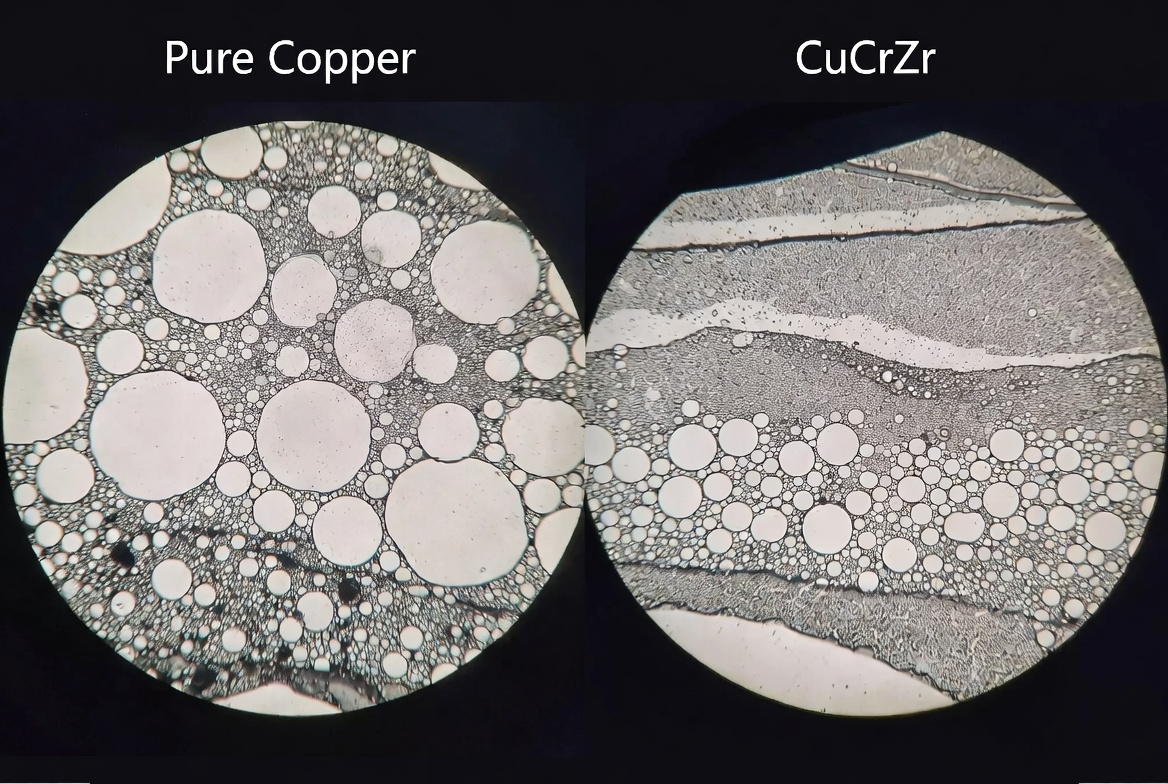
Advantages and Disadvantages – Real-World Perspective
Pure Copper Advantages:
- Highest possible conductivity and thermal performance
- Excellent ductility for bending and forming
- Lower material cost
- Beautiful natural appearance
Pure Copper Disadvantages:
- Soft and prone to deformation under load
- Loses strength quickly at elevated temperatures
- Poor wear resistance in sliding or repeated contact
CuCrZr Advantages:
- Significantly higher strength and hardness after aging
- Excellent resistance to softening at high temperatures
- Superior wear and fatigue resistance
- Maintains good conductivity while being much stronger
CuCrZr Disadvantages:
- Slightly lower conductivity than pure copper
- Higher material and processing cost
- Requires precise heat treatment (solution anneal + aging) for best performance
Engineering Experience: In one recent project at Cymber Metal, a customer initially chose pure copper for welding electrodes. After only 8,000 welds, the tips deformed badly. We switched to C18150 CuCrZr, and the same electrodes lasted over 35,000 welds with almost no wear. The extra cost was recovered in the first month through reduced downtime.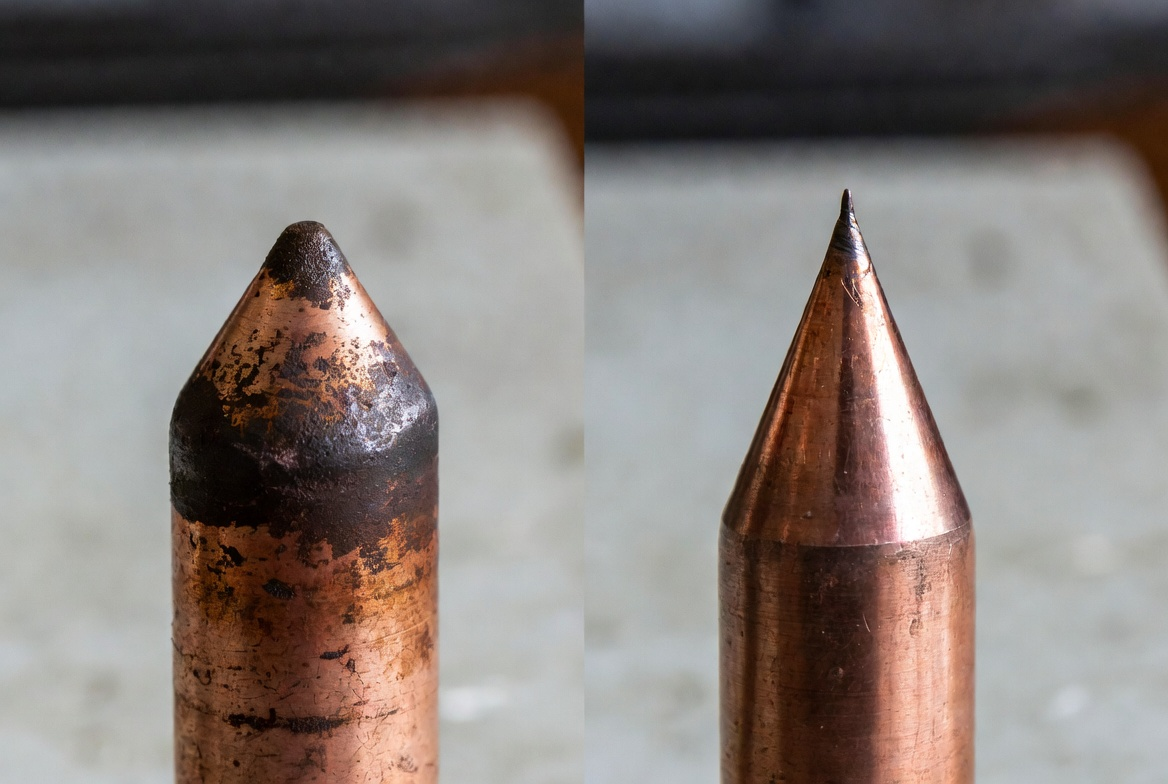
How to Choose Between Pure Copper and CuCrZr
Here’s the simple decision framework I use when talking with customers:
Choose Pure Copper when:
- Maximum electrical or thermal conductivity is the top priority
- Operating temperatures stay below 150–200°C
- The part is not under high mechanical stress or wear
- Budget is a major concern
Choose CuCrZr when:
- The part experiences high temperatures (>200°C)
- Mechanical strength and wear resistance are critical
- You need longer service life in cyclic or abrasive conditions
- The application is welding electrodes, EV motor rotors, or high-power contacts
Pro Tip: If you’re not sure, send me your drawing and operating conditions — I’ll give you a clear recommendation with cost and performance comparison.
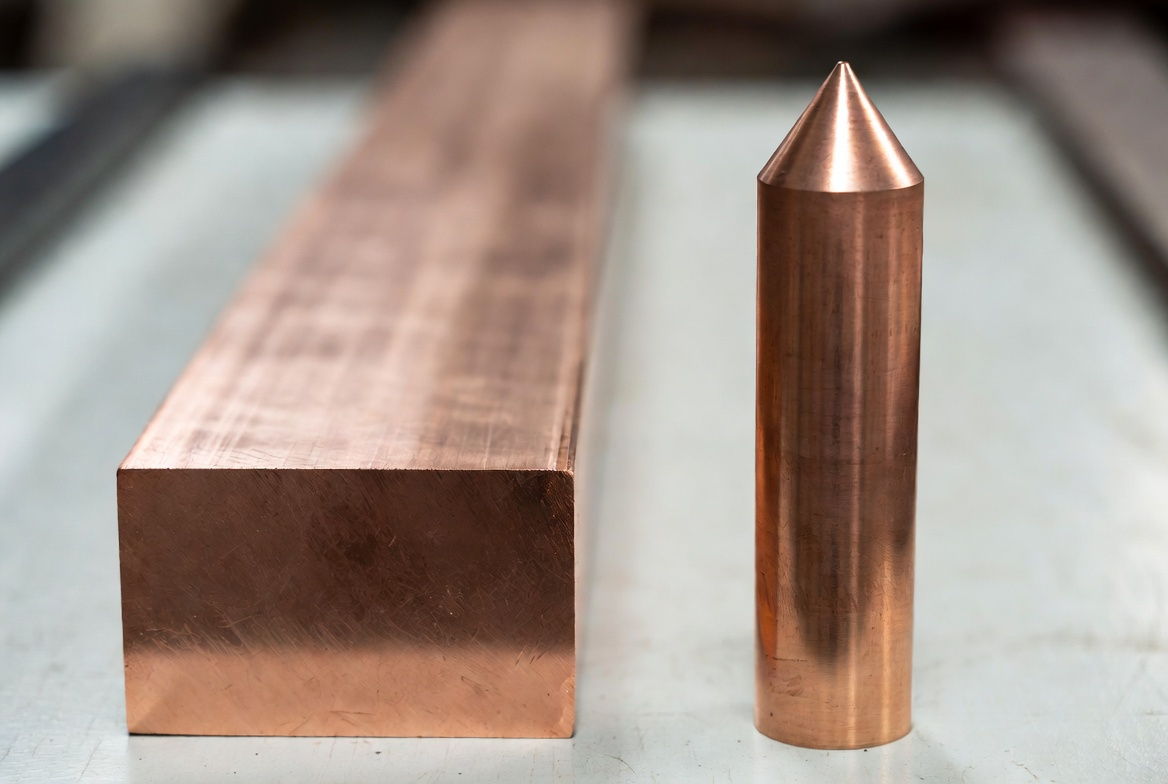
Final Thoughts
Pure copper and CuCrZr each have their own strengths. Pure copper wins when conductivity is everything. CuCrZr wins when you need strength and heat resistance without sacrificing too much conductivity. The right choice depends on your actual operating conditions, not just specifications.
At Cymber Metal we stock and machine both materials for industrial customers worldwide:
You’re also welcome to visit our CYMBER Red Copper Bar & Busbar Core Warehouse to see our full stock and production capabilities.
If you have a project that needs pure copper or CuCrZr — whether busbars, electrodes, motor parts, or custom components — I’d be happy to help you make the best material decision.
Ready to discuss your application? Download the catalogs or contact our team directly.
Download 2026 Chromium Zirconium Copper Catalog (PDF)
Download 2026 Pure Copper Catalog (PDF)
Contact Us for Material Selection Support
Post time: Feb-25-2026