
Published: May 5, 2026
By: Yanwei Hu, Alloys Technical Expert at Cymber Metal
Good morning everyone,
Yanwei Hu here from Cymber Metal.
Every month I speak with procurement teams who are surprised — and sometimes frustrated — when their “straightforward” copper alloy import from China ends up costing 40–60% more than expected or sitting in a CBP hold for weeks. The issues are rarely exotic. They almost always come from skipping one or two critical steps in the import process: wrong HTS classification, under-estimating Section 232 + Section 301 tariff stacking, weak ASTM/SGS verification, or choosing a supplier who has no real stock and no real U.S. export experience.
This guide gives you a complete, practical framework that experienced importers actually use in 2026. It covers the six areas that matter most: HTS classification, real tariff math, ASTM certification verification, supplier evaluation, Incoterm selection, and documentation. I’ll also show you exactly what a reliable Chinese supplier looks like in practice — using our own operation as a benchmark so you know what good looks like.
HTS Classification: The Single Biggest Source of Avoidable Errors
Everything starts with the correct HTS subheading. Get it wrong and you risk duty overpayments, entry holds, or post-entry audits that can cost far more than the original classification work.
Copper alloys fall under Chapter 74. Unwrought material sits under 7403, drawn or extruded rods and bars under 7407, sheets and strip under 7408/7409, and scrap under 7404. The most common mistakes we see are classifying finished CNC-machined parts as raw material, or treating any unfinished form as “unwrought.”
Pro Tip: Before you request pricing, run the exact alloy grade and physical form through the USITC HTS database. It takes ten minutes and removes the largest source of expensive surprises.
What You’re Actually Paying in Tariffs on Chinese Copper in 2026
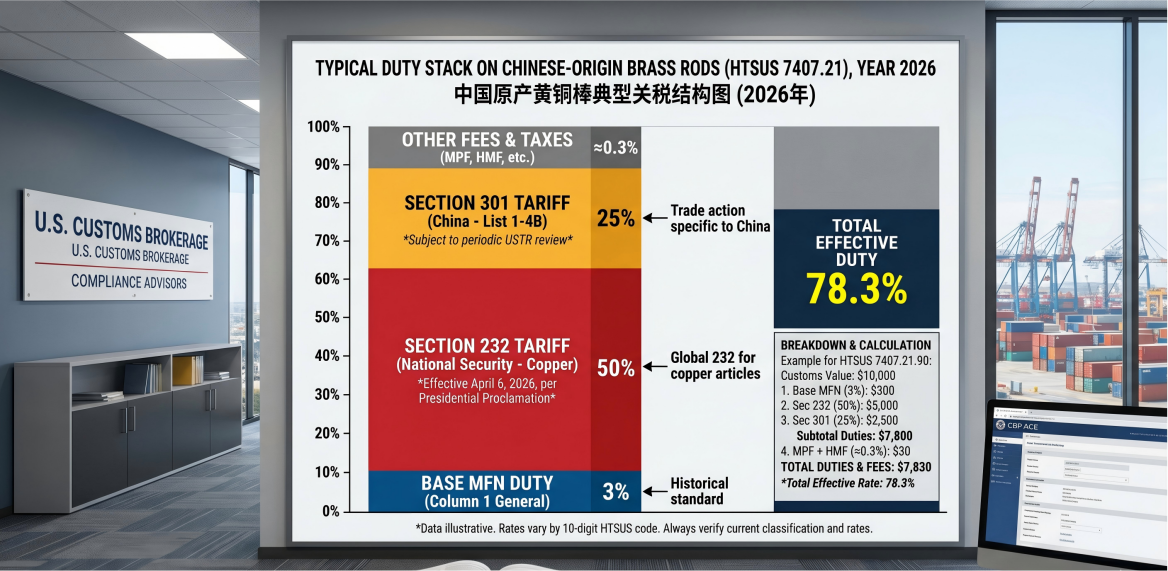
Most buyers are shocked when they see the real effective duty rate. The base MFN duty on most Chapter 74 subheadings is only 1.5–3%. What changes everything is the stacking of Section 232 (25%) and Section 301 (historically 25%) on top.
For many brass and bronze items, the total effective duty can reach 51–53% of CIF value before MPF. That is not a rounding error — it is the cost model.
Real Example $10,000 FOB brass rods + $1,500 ocean freight/insurance = $11,500 CIF
- Base MFN 1.5% ≈ $172
- Section 232 25% ≈ $2,875
- Section 301 25% ≈ $2,875
- MPF ≈ $40
Total duties & fees ≈ $5,962 Landed cost before state taxes ≈ $17,462
A supplier quoting $9,500 FOB is not saving you money if your total landed cost stays the same or goes up. Always calculate landed cost before you negotiate FOB price.
How to Verify Real ASTM Certification from a Chinese Supplier
Many Chinese supplier websites claim “ASTM compliant.” What actually matters is whether they can provide a batch-specific Mill Test Report (MTR) that includes:
- Exact alloy designation (e.g., C26000, C70600, C17200)
- Chemical composition per heat/lot
- Mechanical properties
- Heat and lot numbers
- Testing laboratory stamp
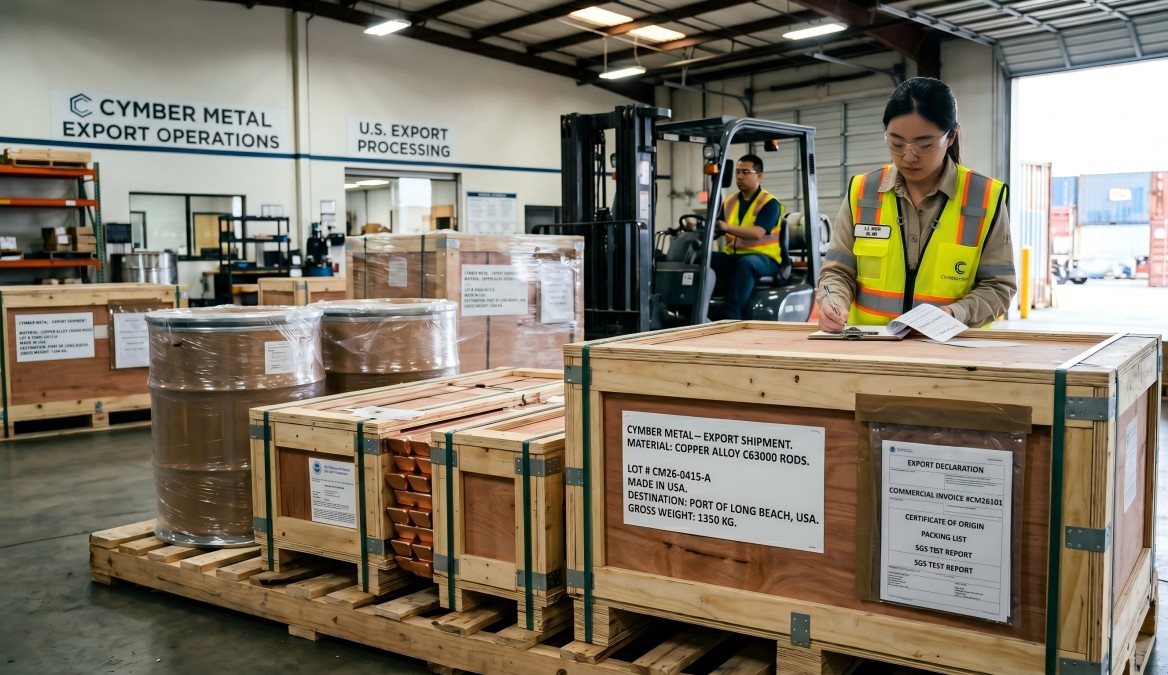
A credible supplier will also offer third-party SGS batch testing that references the same heat/lot numbers as the material you are receiving. At Cymber Metal we run SGS testing on outgoing shipments and hold ISO 9001:2015 certification, so U.S. buyers receive a traceable paper trail that holds up under both internal QA and CBP scrutiny.
What Separates a Reliable Supplier from a Risky One
When evaluating Chinese copper alloy suppliers for U.S. import, two capabilities matter above everything else:
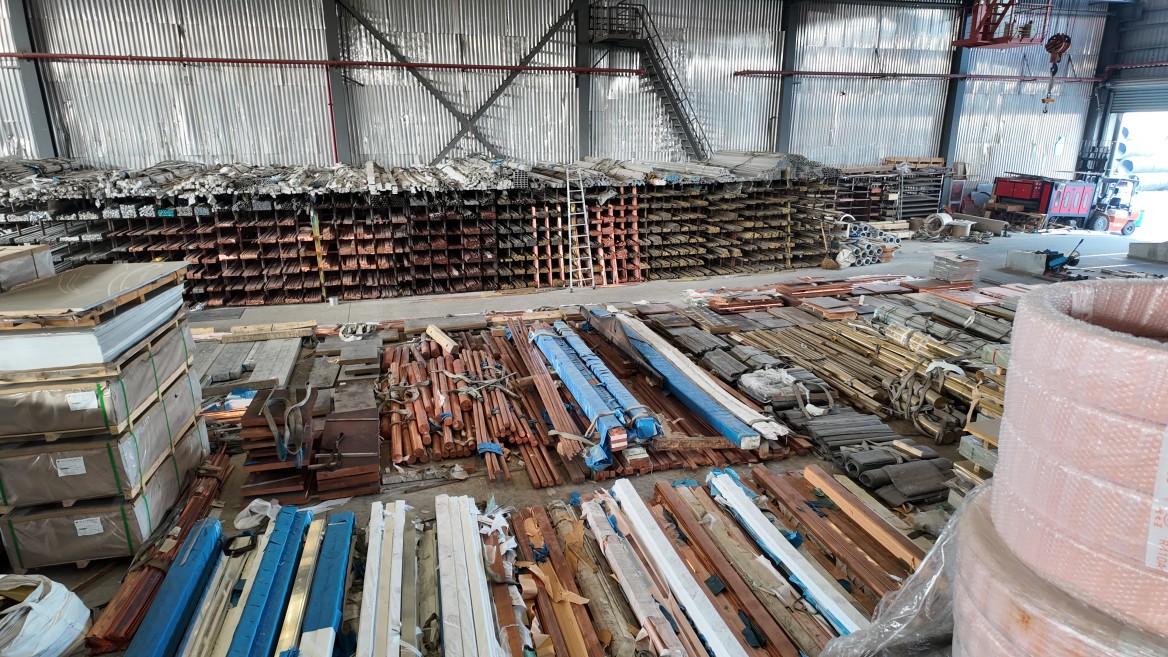
- Physical spot inventory at meaningful scale A supplier with a self-owned warehouse holding hundreds of tons across alloy grades can ship within days and has no incentive to substitute material. They can also offer lower MOQs and flexible cut lengths.
- Documented U.S. export track record + in-house processing Ask for shipping references and verify they can answer specific questions about Section 232 declarations without hesitation. In-house CNC machining, slitting, and cutting capability eliminates a downstream step and reduces the risk of dimensional non-conformance arriving at your dock.
Cymber Metal operates self-owned warehouses in Jiangyin and Zhejiang, stocked across brass, bronze, phosphor bronze, beryllium copper, cupronickel, and chromium zirconium copper — all ASTM and AMS certified. Our in-house CNC machining and busbar fabrication capability means U.S. buyers can consolidate material sourcing and part fabrication under a single purchase order.
FOB vs CIF and Documentation That Actually Clears CBP
For most U.S. buyers the practical choice is between FOB and CIF. Experienced importers usually prefer FOB from Shanghai or Ningbo because it gives better visibility and control over freight costs. Jiangyin-based suppliers like us typically ship through Wuxi or Shanghai with direct services to both U.S. coasts.
Documentation checklist that prevents most holds:
- Commercial invoice with detailed description, HTS code, country of origin, and value
- Packing list
- Bill of lading / air waybill
- Certificate of origin
- Batch-specific mill test reports + SGS reports
- Section 232 declaration (when applicable)
For first-time orders, negotiate pre-shipment inspection rights (SGS, Bureau Veritas, or Intertek) into the contract. Require that passed inspection results are sent to your freight forwarder before the container is released for loading.
Getting It Right from the Start
The framework is straightforward but demands consistent execution:
- Classify correctly using the USITC HTS database before requesting pricing
- Build Section 232 + Section 301 tariffs into your landed cost model before negotiating FOB
- Verify ASTM certification through batch-specific SGS reports
- Evaluate suppliers on physical inventory depth, MOQ flexibility, U.S. export experience, and in-house processing capability
- Choose your Incoterm based on your freight management maturity
Buyers who run into problems are almost always the ones who treated one of these steps as optional.
If you are looking for a reliable starting point for importing copper alloys from China, you can explore our full range and current stock on the CYMBER METAL Product Page or visit our Ready Stock Warehouses to see real-time inventory. Our export team is experienced with U.S. compliance requirements and can provide alloy specifications, certification documentation, and landed cost estimates for your specific needs.
Final Thoughts
Importing copper alloys from China in 2026 is entirely manageable — and often highly advantageous — when you work with a supplier who has already built U.S. compliance, stock depth, and in-house processing into their standard operation. The difference between a smooth import and an expensive headache usually comes down to choosing the right partner from the beginning.
If you have an upcoming requirement or simply want to understand your realistic landed cost and lead time, send us the details. We’ll give you straight answers and help you avoid the common pitfalls that catch even experienced procurement teams.
Ready to import with confidence? Reach out anytime — our team moves quickly on U.S.-specific requirements.
Download 2026 Copper Alloy Import Compliance Guide (PDF)
Contact Us for Landed Cost & Compliance Support
Post time: May-05-2026