
Publication Date: July 1, 2026
Author: Hu Yanwei, Cymber Metal Technical Expert
Quick Answer
A high-value custom aluminum extrusion supplier should not only provide a low unit price. Buyers should evaluate alloy selection, tooling cost, MOQ, drawing review ability, tolerance control, stock alternatives, CNC machining support, surface treatment options, inspection documents, packing quality and export delivery reliability.
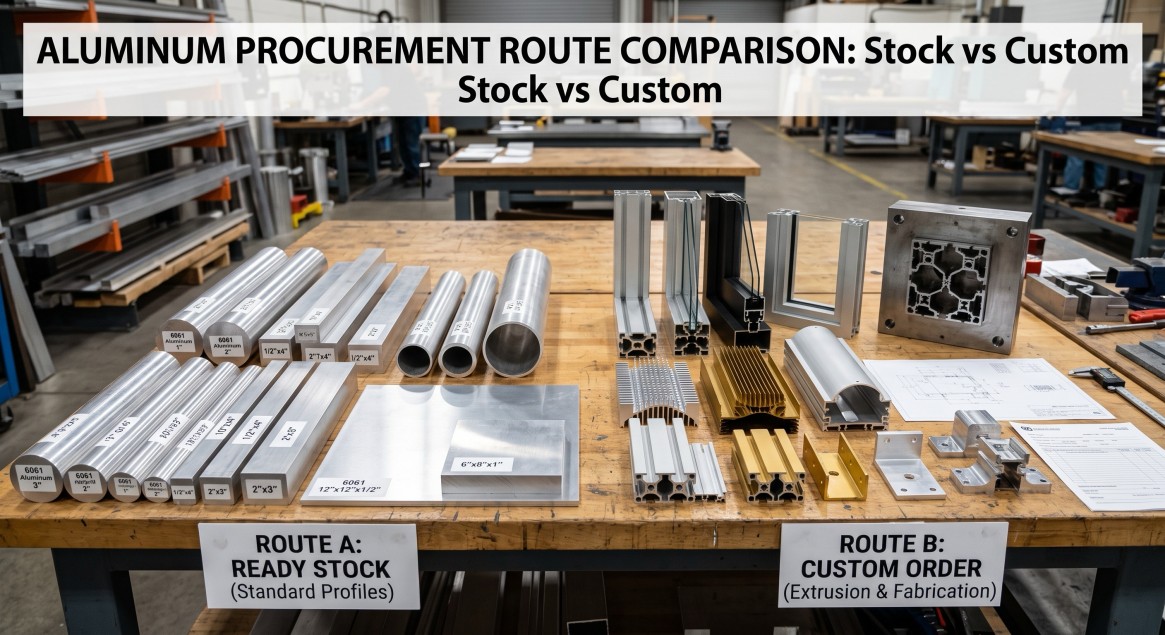
Before opening a new extrusion die, overseas buyers should also check whether the part can be produced from existing aluminum round bar, square bar, rectangular bar, plate, tube or CNC-machined stock. This can reduce early tooling risk and make trial orders easier before bulk production.
CYMBER Metal supplies aluminum alloy products including aluminum round bar, square bar, rectangular bar, hex bar, plate, tube, thick plate, forged plate and heavy-wall aluminum pipe for industrial buyers who need stock supply, custom processing and export support.
Why Custom Aluminum Extrusion Supplier Selection Matters in 2026
In 2026, buyers are no longer only comparing aluminum extrusion price per kilogram. For industrial projects, the bigger question is whether the supplier can help reduce total procurement risk.
A weak supplier may create problems before mass production starts:
- Tooling cost is quoted without drawing review.
- MOQ is too high for the first order.
- Alloy grade is not matched to the application.
- Tolerance is promised but not controlled.
- Secondary machining cost is ignored.
- Surface treatment is not confirmed early.
- Packing is not suitable for export shipment.
- Lead time sounds fast but is not supported by stock or process planning.
For custom aluminum extrusion projects, the supplier’s value comes from technical review, route selection and delivery control, not only from material price.
What Counts as a High-Value Aluminum Extrusion Supplier?
A high-value supplier helps the buyer reduce risk across the whole project.
| Evaluation Area | What Buyers Should Check | Why It Matters |
|---|---|---|
| Alloy selection | 6061, 6063, 6082, 7075, 5052, 5083 and other options | Prevents material mismatch |
| Drawing review | Wall thickness, tolerance, profile complexity | Reduces tooling rework |
| Tooling cost | Die cost, trial cost, adjustment cost | Affects first-order budget |
| MOQ | Trial quantity and bulk order planning | Controls early cash pressure |
| Stock alternatives | Bar, plate, tube or CNC route | May avoid unnecessary tooling |
| Machining support | Cutting, drilling, milling, tapping | Supports finished component needs |
| Surface treatment | Anodizing, polishing, coating or protection | Affects appearance and corrosion resistance |
| Inspection | Dimensional, surface and material checks | Supports project documentation |
| Export packing | Scratch, deformation and moisture protection | Reduces transport damage |
Start With the Application, Not the Price
Before asking for a quotation, buyers should define the application environment.
Custom aluminum extrusions may be used in:
- Industrial machinery frames
- Automation equipment
- EV and battery system structures
- Heat sinks and cooling components
- Electrical equipment housings
- Rail and transportation parts
- Construction and architectural profiles
- Marine and outdoor structures
- Precision CNC-machined aluminum components
A supplier who understands the application can recommend a better route: extrusion, stock machining, plate cutting, tube modification or forged aluminum processing.
Aluminum Product Routes Before Opening a New Die
Before confirming a new custom extrusion die, buyers should compare existing aluminum stock options.
| Buyer Requirement | Possible CYMBER Product Route | Why It Helps |
|---|---|---|
| Round machined parts | Extruded 6061 Aluminum Round Bar | Good for turned or milled components |
| Flat or rectangular parts | Extruded Aluminum Rectangular Bar | May avoid custom profile tooling |
| Structural flat components | Structural 6061 Aluminum Plate | Useful for cut plates and machined parts |
| Tube or sleeve-like parts | Structural 6061 Aluminum Tube | May reduce hollow extrusion tooling |
| Large tube or pipe parts | Large Diameter 6061 Aluminum Tube | Suitable for larger industrial structures |
| Heavy structural plates | Custom Cut Heavy Duty Aluminum Alloy Plates | Good for tooling plates, machinery bases and structural parts |
| High-strength thick plates | Aerospace-Grade Forged Thick Aluminum Sheets | Better for high-strength or heavy-duty applications |
| Heavy wall tubes | Precision Forged Heavy Wall Aluminum Pipes | Useful for pressure, machinery and structural applications |
This comparison is important because not every custom shape should start with a new extrusion die. For small batches or early-stage projects, stock plus machining may be more cost-effective.
Custom Extrusion vs Stock + CNC Machining
Many buyers assume custom extrusion is always cheaper. That is true only when the order quantity is high enough and the design is stable.
| Production Route | Best For | Main Limitation |
|---|---|---|
| Custom aluminum extrusion | Repeated bulk orders with consistent cross-section | Tooling cost and MOQ |
| CNC machining from bar | Trial orders, short runs, precision features | Higher unit machining cost |
| Cutting from plate | Flat structural parts, brackets, machine plates | Material waste may increase |
| Tube modification | Hollow parts, sleeves, frames | Shape flexibility is limited |
| Forged aluminum plate or pipe | High-strength structural applications | Higher material and processing cost |
A practical decision rule:
Prototype stage: consider stock + CNC machining.
Stable bulk order: consider custom extrusion.
High-strength structural use: consider forged plate or heavy-wall pipe.
Hollow or frame part: check aluminum tube options first.
CYMBER can support custom aluminum processing through the CNC Machining Workshop when buyers need cutting, milling, drilling, tapping, slotting or finished component preparation.
How Tooling Cost and MOQ Affect the Real Price
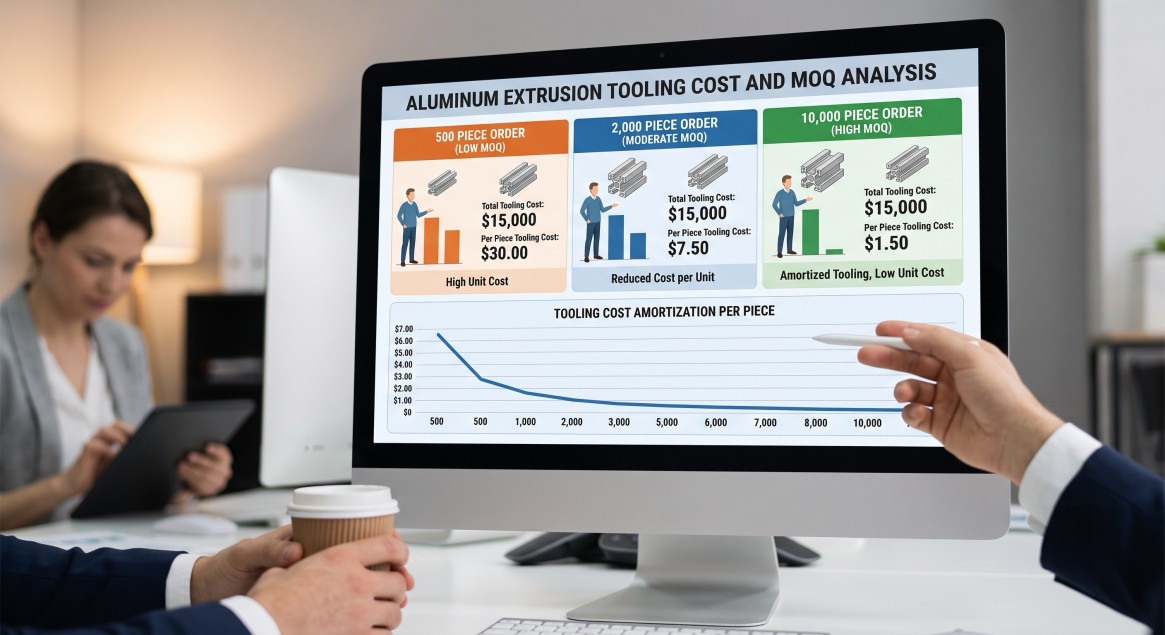
For custom aluminum extrusion, tooling cost should be calculated across usable quantity.
Tooling Cost Per Piece =
Total Tooling Cost / Usable Quantity
| Order Quantity | Tooling Cost | Tooling Cost Per Piece |
|---|---|---|
| 500 pcs | USD 1,000 | USD 2.00 |
| 2,000 pcs | USD 1,000 | USD 0.50 |
| 10,000 pcs | USD 1,000 | USD 0.10 |
This is why buyers should not evaluate die cost alone. A tooling fee may look expensive for a trial order but become acceptable for a repeated bulk order.
Which Aluminum Alloy Should Buyers Consider?
Different aluminum alloys behave differently during extrusion, machining, welding and surface treatment.
| Alloy | Typical Use | Buyer Notes |
|---|---|---|
| 6061 | Structural parts, CNC components, machinery parts | Strong balance of strength, machinability and corrosion resistance |
| 6063 | Architectural profiles, decorative extrusions, frames | Good extrusion performance and surface finish |
| 6082 | Structural applications, machinery and transportation | Higher strength than 6063, good machining |
| 7075 | Aerospace, high-strength components | Very high strength, less suitable for all extrusion shapes |
| 5052 | Sheet metal, marine, formed parts | Good corrosion resistance and formability |
| 5083 | Marine and heavy-duty structures | Strong corrosion resistance in harsh environments |
| 3003 | General sheet, forming and lightweight parts | Good workability, moderate strength |
| 1060 / 1050 | Electrical and thermal applications | High purity, good conductivity and formability |
For custom aluminum extrusion, 6061 and 6063 are common starting points. For high-strength or heavy-duty applications, buyers may need 6082, 7075, 5083 or forged aluminum material.
Drawing Review Before Quotation
A reliable custom aluminum extrusion supplier should review the drawing before giving a final quotation.
Buyers should send:
- 2D drawing with dimensions and tolerance
- 3D file if available
- Aluminum alloy grade or application requirement
- Wall thickness and cross-section details
- Profile length
- Annual demand or target batch quantity
- Surface treatment requirement
- CNC machining requirement after extrusion
- Packing and destination country
- Target delivery schedule
If the buyer does not know the best alloy, the supplier should help compare options based on strength, corrosion resistance, machining, weight, surface finish and cost.
What Buyers Should Ask Before Choosing a Supplier
Before confirming a custom aluminum extrusion supplier, buyers should ask:
| Question | Why It Matters |
|---|---|
| Can you review the drawing before quoting tooling? | Reduces tooling mistake risk |
| Do you offer stock alternatives before opening a die? | May reduce trial order cost |
| Which alloys can you support? | Prevents material mismatch |
| What MOQ is required? | Affects project budget |
| Can you provide CNC machining after extrusion? | Supports finished parts |
| Can you inspect tolerance and surface finish? | Supports quality control |
| Can you provide export packing? | Reduces transport damage |
| Can you separate tooling and material cost? | Improves quotation transparency |
| Can you support repeat orders? | Helps long-term procurement planning |
Transparent Quotation Structure
A clear quotation should separate cost items instead of giving one unclear unit price.
Final Cost =
Aluminum Material Cost
+ Tooling Cost
+ Extrusion / Processing Cost
+ CNC Machining or Secondary Processing
+ Surface Treatment
+ Inspection
+ Packaging
+ Freight or Export Handling
This makes it easier for procurement teams to compare suppliers fairly.
If a quote looks low but excludes machining, surface treatment, inspection or export packing, the final project cost may become higher later.
Red Flags When Evaluating a Supplier
Be cautious if a supplier:
- Quotes without reviewing drawings
- Pushes tooling before checking stock alternatives
- Cannot explain alloy differences
- Does not discuss MOQ clearly
- Ignores wall thickness or tolerance issues
- Cannot support secondary machining
- Provides no inspection plan
- Uses weak export packing
- Cannot support repeat orders or batch consistency
A reliable supplier should help buyers choose the right route, not only sell a die.
Why Buyers Work With CYMBER Metal
CYMBER Metal supports overseas buyers who need aluminum alloy materials, custom extrusion review, stock alternatives and processing coordination.
Our support includes:
- Aluminum alloy product supply including bar, tube, plate, thick plate and forged materials
- Extruded 6061 aluminum round bar support for machined components
- Extruded aluminum rectangular bar support for fabrication work
- Aluminum tube and large-diameter tube support for hollow structures
- Heavy-duty aluminum alloy plate and forged thick plate support for structural applications
- CNC machining coordination for custom aluminum components
- Stock checking and batch preparation through our large-scale copper and aluminum warehouse
- Export packing and shipment support
- Drawing-based quotation support for custom aluminum extrusion and machined parts
If you are evaluating a custom aluminum extrusion supplier, send your drawing, target quantity, aluminum grade, tolerance, surface treatment and annual demand through the CYMBER Metal contact page. Our team can help compare tooling cost, MOQ, stock alternatives, machining route and export quotation.
Conclusion
A high-value custom aluminum extrusion supplier should help buyers reduce total project risk, not only provide a low price.
Before opening a new die, buyers should compare aluminum stock options, review the drawing, confirm alloy grade, calculate MOQ impact, separate tooling cost and check whether CNC machining or plate/tube routes can reduce early-stage cost.
For procurement teams in 2026, the best supplier is the one that can support both material selection and practical production route planning before bulk order.
FAQ
What is custom aluminum extrusion?
Custom aluminum extrusion is a process of producing aluminum profiles with a specific cross-section by forcing aluminum alloy through a die. It is widely used in industrial frames, machinery, electrical equipment, transportation and structural components.
How do buyers reduce aluminum extrusion tooling cost?
Buyers can reduce tooling risk by checking existing aluminum bar, tube, plate and CNC machining routes before opening a new die, simplifying profile geometry and confirming realistic MOQ.
Is custom aluminum extrusion better than CNC machining?
Custom extrusion is better for repeated bulk orders with a stable cross-section. CNC machining is often better for prototypes, small batches, precision features or designs that are not ready for tooling.
Which aluminum alloys are common for extrusion?
6061 and 6063 are common extrusion alloys. 6082, 7075, 5052, 5083, 3003, 1060 and 1050 may be selected depending on strength, corrosion resistance, machining and application requirements.
Can CYMBER support custom aluminum extrusion and machining?
Yes. CYMBER supports aluminum alloy stock supply, drawing review, custom extrusion route evaluation, CNC machining coordination, inspection support, export packing and quotation preparation.
Post time: Jul-01-2026