
Publication Date: July 5, 2026
Author: Hu Yanwei, Cymber Metal Technical Expert
Quick Answer
A C12200 copper tube is usually the better choice for plumbing, HVAC, refrigeration, heat transfer and brazing-related applications because it is phosphorus-deoxidized copper with good formability, weldability and corrosion resistance. Oxygen-free copper tube is better when the project requires very high electrical conductivity, high purity, vacuum performance, or low oxygen content for sensitive electrical and thermal systems. CYMBER Metal supports buyers with C12200 phosphorus deoxidized copper material, oxygen-free soft temper copper tube, pure copper materials and custom processing support for industrial buyers.
For procurement teams, the question is not which copper tube is “better” in general. The real question is which material better matches the working condition, forming route, joining method, conductivity requirement and inspection standard.
Why Buyers Compare C12200 Copper Tube and Oxygen-Free Copper Tube
Copper tubes are widely used in HVAC systems, refrigeration equipment, heat exchangers, plumbing, electrical equipment, instrumentation and industrial thermal systems. However, different copper grades behave differently during bending, brazing, welding, pressure service and electrical use.
Many buyers compare C12200 copper tube with oxygen-free copper tube because both belong to high-purity copper materials, but they are designed for different priorities.
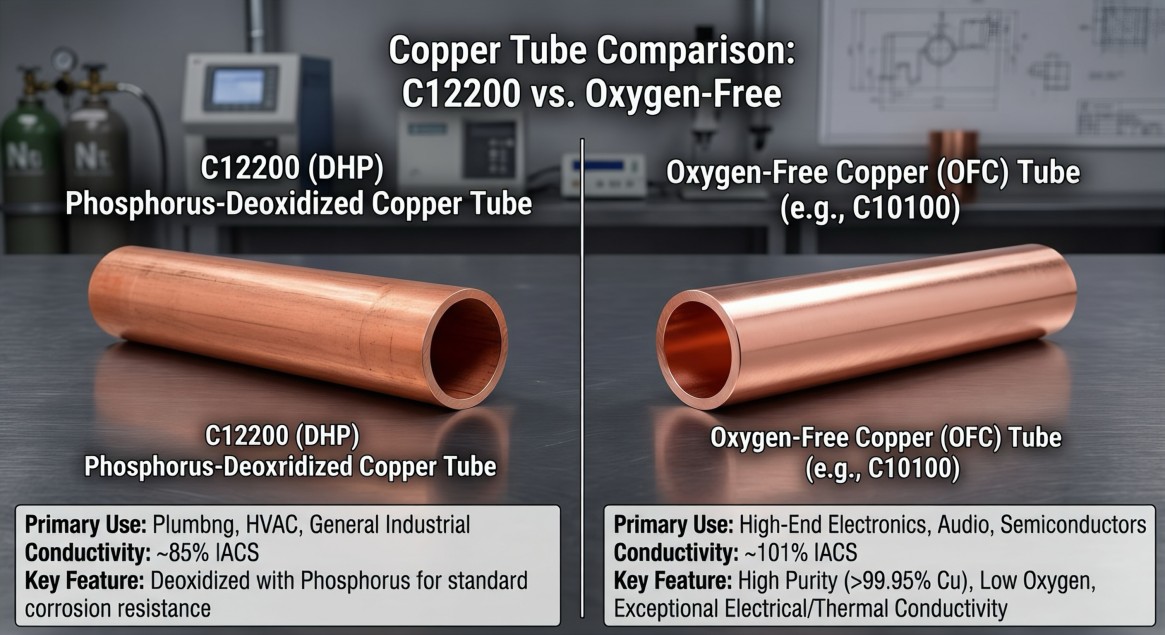
C12200 is commonly known as phosphorus-deoxidized copper or Cu-DHP. Oxygen-free copper usually refers to grades such as C10200 or C10100, depending on the required purity and conductivity level.
What Is C12200 Copper Tube?
C12200 copper tube is a phosphorus-deoxidized copper material. The small phosphorus content helps remove oxygen during production, which improves weldability and brazing performance. This makes C12200 a practical choice for tube applications where forming, joining and corrosion resistance matter.
Buyers often consider C12200 copper tube for:
- Plumbing systems
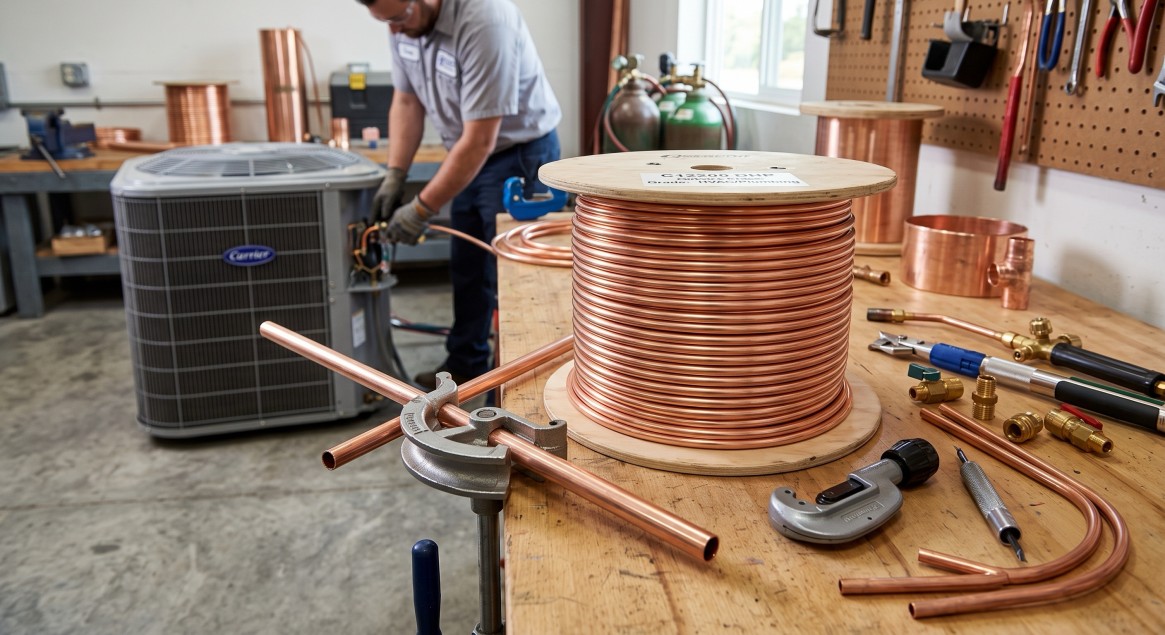
- HVAC and refrigeration lines
- Heat exchangers
- Condensers
- Water and gas transfer systems
- Brazed or soldered assemblies
- Pipe fitting processing
For projects connected with plumbing or pipe fitting production, CYMBER’s Cu-DHP C12200 phosphor deoxidized copper sheet for pipe fitting processing is a relevant material reference, especially when buyers need C12200-related copper stock for forming, cutting or fabrication.
What Is Oxygen-Free Copper Tube?
Oxygen-free copper tube is produced with very low oxygen content and high copper purity. It is usually selected when conductivity, purity and stability are more important than standard plumbing performance.
Oxygen-free copper tube is often used in:
- Electrical and electronic systems
- Vacuum equipment
- High-conductivity thermal parts
- Precision refrigeration and heat transfer systems
- Welding and brazing applications where high purity matters
- Sensitive industrial equipment
For buyers comparing oxygen-free copper tube options, CYMBER’s C10200 and C11000 oxygen-free soft temper copper pancake coil tube is a direct product reference for refrigeration, AC, heat transfer and welding-related projects.
C12200 Copper Tube vs Oxygen-Free Copper Tube: Key Differences
| Item | C12200 Copper Tube | Oxygen-Free Copper Tube |
|---|---|---|
| Material type | Phosphorus-deoxidized copper | High-purity low-oxygen copper |
| Common grades | C12200 / Cu-DHP | C10200 / C10100 |
| Main strength | Brazing, soldering, forming, corrosion resistance | Electrical conductivity, purity, low oxygen content |
| Conductivity | Lower than oxygen-free copper because of phosphorus | Higher conductivity and better purity control |
| Typical use | Plumbing, HVAC, refrigeration, heat exchangers | Electrical, vacuum, high-purity thermal systems |
| Buyer concern | Confirm phosphorus range, wall thickness and pressure use | Confirm oxygen content, conductivity and surface quality |
| Cost logic | Often more practical for standard tube systems | Usually selected when performance requirements justify cost |
How to Choose by Application
Choose C12200 copper tube for plumbing, HVAC and refrigeration
If the project involves water lines, gas lines, HVAC tubing, refrigeration systems, condensers or heat exchangers, C12200 is often the more practical choice. Its deoxidized structure supports reliable brazing and soldering, which is important for tube assemblies.
For buyers working with tube and fitting systems, CYMBER’s copper pipe fittings category is also relevant because tube material selection should be reviewed together with fitting compatibility, joining method and pressure conditions.
Choose oxygen-free copper tube for conductivity-sensitive systems
If the project requires higher electrical conductivity, low oxygen content, high purity or vacuum compatibility, oxygen-free copper is usually the stronger candidate.
This is especially important in electrical parts, high-performance thermal components and precision equipment where small changes in purity or conductivity can affect performance. CYMBER’s C10200 copper page is a useful reference when buyers are comparing oxygen-free copper-related material options.
Choose by joining method
If the tube will be brazed, soldered or welded in large quantities, C12200 is often easier to justify for industrial use. If the tube will be used in an electrical system where conductivity is the first requirement, oxygen-free copper may be better.
Choose by inspection requirement
A buyer should not only ask for “copper tube.” The RFQ should specify:
- Copper grade
- Standard
- Outer diameter and wall thickness
- Temper
- Straight tube or coil tube
- Surface condition
- Conductivity requirement
- Pressure or leak test if required
- MTC or inspection report requirement
Material Selection Table for Buyers
| Buyer requirement | Better option | Reason |
|---|---|---|
| General HVAC tubing | C12200 copper tube | Good forming and brazing performance |
| Plumbing and water systems | C12200 copper tube | Practical corrosion resistance and joining behavior |
| High electrical conductivity | Oxygen-free copper tube | Higher purity and conductivity |
| Vacuum or low-outgassing equipment | Oxygen-free copper tube | Lower oxygen content and cleaner material route |
| Heat exchanger tubing | Depends on design | C12200 for standard systems, oxygen-free copper for high-purity requirements |
| Refrigeration coil tube | Often oxygen-free soft temper tube | Good for bending and thermal transfer when specified |
| Pipe fitting fabrication | C12200 copper material | Good processing and joining performance |
What Buyers Should Confirm Before Bulk Order
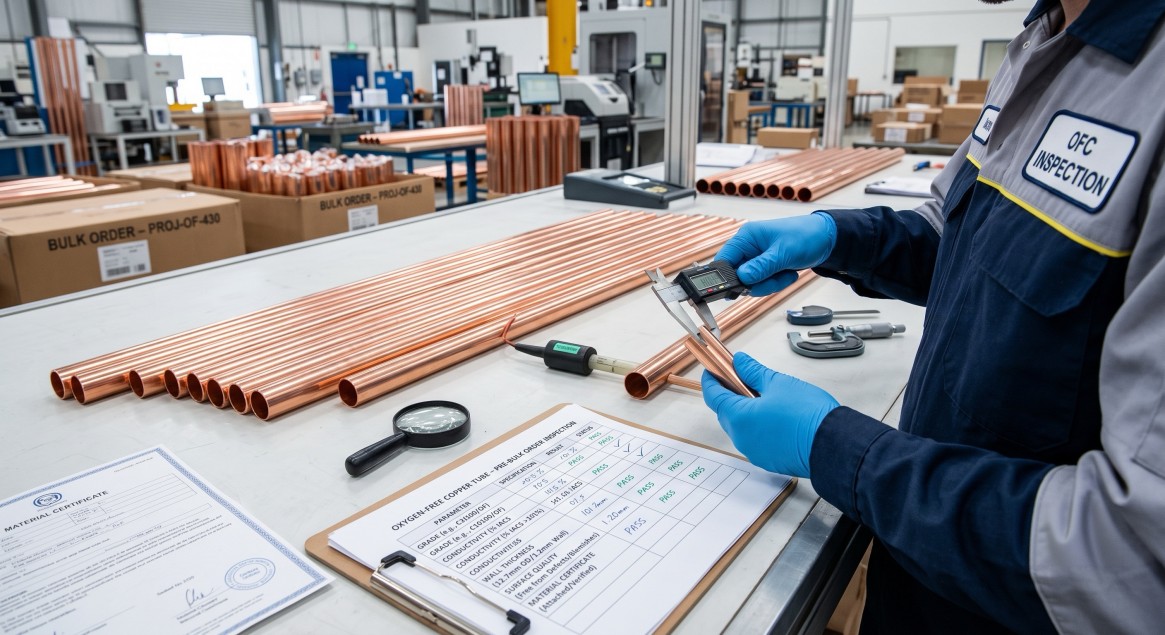
Before confirming a bulk order of C12200 copper tube or oxygen-free copper tube, buyers should review both the material certificate and the actual manufacturing condition.
1. Chemical composition
For C12200 copper tube, confirm phosphorus content and copper purity. For oxygen-free copper tube, confirm oxygen content, copper purity and grade identity such as C10200 or C10100.
2. Dimensional tolerance
Tube OD, wall thickness, length, roundness and straightness should be confirmed before production. If the tube will be bent or assembled with fittings, tolerance stability becomes even more important.
3. Temper and formability
Soft temper copper tube is easier to bend and coil, while harder temper may be better for straight-line installation or structural stability. The buyer should confirm whether the project needs straight tube, pancake coil tube or custom-cut lengths.
4. Surface condition
Copper tube surface defects may affect sealing, brazing, corrosion resistance and appearance. Buyers should check inner and outer surface cleanliness, scratches, oxidation and oil contamination.
5. Joining and leak performance
For HVAC, refrigeration and plumbing projects, brazing, soldering and leak performance are critical. Buyers should confirm whether pressure testing, eddy current testing or other inspection is required.
6. Packing and export protection
Copper tubes are easily affected by bending damage, moisture and surface scratches during international shipment. Export packing should be confirmed before bulk order.
Inspection Checklist Before Confirming Production
| Inspection item | C12200 copper tube | Oxygen-free copper tube |
|---|---|---|
| Grade confirmation | C12200 / Cu-DHP | C10200 / C10100 |
| Chemical composition | Copper and phosphorus range | Copper purity and oxygen content |
| Conductivity | Required if electrical use exists | Usually critical |
| OD and wall thickness | Must match drawing or standard | Must match drawing or standard |
| Surface quality | Important for brazing and sealing | Important for purity and conductivity |
| Temper | Soft, half-hard or hard as required | Soft temper often used for coils |
| Tube form | Straight or coil | Straight, coil or custom form |
| Test report | MTC, dimensional report, leak test if needed | MTC, conductivity, dimensional report |
| Packing | Anti-bending and anti-scratch | Anti-contamination and anti-scratch |
Machining and Fabrication Considerations
Copper tube projects are often not limited to raw material supply. Buyers may also need cutting, bending, end forming, flaring, cleaning, deburring, machining or assembly preparation.
If the project requires additional processing, CYMBER Metal can support copper material selection together with fine machining and CNC machined parts workshop capability. This is useful when the buyer needs copper tube-related parts, fittings, connectors or precision-machined copper components from the same supply chain.
For urgent projects, CYMBER’s ready stock warehouses also provide an important supply-chain advantage, especially when buyers need faster material preparation before cutting, inspection or export packing.
Common RFQ Mistakes Buyers Should Avoid
Asking only for “pure copper tube”
“Pure copper tube” is not specific enough. Buyers should define whether they need C12200, C10200, C10100, C11000 or another grade.
Ignoring tube temper
The same grade may behave differently during bending and assembly if the temper is wrong.
Comparing only unit price
A cheaper tube may create higher cost later if wall thickness tolerance, surface quality or packing protection is poor.
Not confirming inspection documents
For industrial use, buyers should confirm MTC, dimensional inspection, conductivity report if required, and export packing method before bulk order.
Why Buyers Work With CYMBER Metal
CYMBER Metal supports international buyers who need copper materials for industrial manufacturing, HVAC, refrigeration, electrical systems, heat transfer and custom processing.
For C12200 copper tube and oxygen-free copper tube projects, buyers can work with CYMBER Metal to review:
- Copper grade selection
- Tube form and temper
- OD and wall thickness requirement
- Surface and inspection requirements
- Cutting or machining support
- Bulk order packing and export coordination
CYMBER Metal combines pure copper materials, copper tube-related product options, ready stock and processing support to help buyers reduce sourcing risk before mass production.
Conclusion
C12200 copper tube and oxygen-free copper tube are both valuable industrial copper materials, but they serve different priorities.
Choose C12200 copper tube when the project focuses on plumbing, HVAC, refrigeration, brazing, soldering, corrosion resistance and practical tube fabrication. Choose oxygen-free copper tube when high conductivity, low oxygen content, high purity or sensitive electrical and vacuum performance matters more.
For industrial buyers, the best decision comes from matching grade, application, joining method, tolerance, inspection and export requirements before confirming bulk order.
FAQ
What is C12200 copper tube used for?
C12200 copper tube is commonly used for plumbing, HVAC, refrigeration, heat exchangers, condensers and brazed tube assemblies because it offers good forming and joining performance.
Is C12200 copper the same as oxygen-free copper?
No. C12200 is phosphorus-deoxidized copper, while oxygen-free copper usually refers to grades such as C10200 or C10100 with very low oxygen content and higher conductivity.
Which is better for HVAC, C12200 copper tube or oxygen-free copper tube?
For standard HVAC and refrigeration systems, C12200 copper tube is often practical because of its brazing and forming performance. Oxygen-free copper tube may be selected when the design requires higher purity or special thermal/electrical performance.
Which copper tube has better electrical conductivity?
Oxygen-free copper tube usually has better electrical conductivity than C12200 because C12200 contains phosphorus, which improves deoxidation and joining behavior but lowers conductivity compared with oxygen-free copper.
What should buyers check before ordering copper tube in bulk?
Buyers should confirm grade, standard, OD, wall thickness, temper, straight or coil form, surface condition, chemical composition, inspection report, leak test requirement and export packing.
Can CYMBER Metal support copper tube processing?
Yes. CYMBER Metal supports copper material supply and processing coordination, including cutting, machining, inspection and export packing support for industrial copper tube and copper component projects.
Post time: Jul-05-2026