
Published: March 31, 2026
By: Yanwei Hu, Aluminum Alloys Technical Expert at Cymber Metal
Good morning everyone,
Yanwei Hu here from Cymber Metal.
Every week I get the same question from engineers all over the world: “Yanwei, I have this new CNC job — what copper alloy should I pick to match the customer’s requirements?”
It’s a fair question. Copper alloys look similar on paper, but the wrong choice can turn a perfectly good drawing into expensive scrap or a part that fails in the field. After more than a decade on the shop floor helping customers solve exactly this problem, I’ve developed a simple, practical framework that I use every time a new drawing lands on my desk.
Today I’ll walk you through it step by step — no theory, just the real-world logic we use when we need to decide fast and get it right the first time.
Step 1: Start with the Customer’s Biggest Need
Before you even look at grades, ask yourself one question: what is the single most important requirement?
- Maximum electrical or thermal conductivity? → Pure copper (C11000 or C10100) is usually the answer.
- High wear resistance and sliding contact? → Tin bronze or phosphor bronze.
- Strength plus seawater corrosion resistance? → Aluminum bronze (especially C95800).
- Non-sparking safety in explosive environments? → Beryllium copper.
- Good machinability and reasonable strength at lower cost? → Brass (H62, H59, or free-machining grades).
- Balanced conductivity and heat resistance? → Chromium zirconium copper (C18150).
- Excellent corrosion resistance in marine or chemical service? → Cupronickel (B10 or B30).
Step 2: Check the Operating Environment
Next, think about where the part will live:
- Seawater or aggressive chemicals → Aluminum bronze or cupronickel.
- High temperature or repeated thermal cycling → Chromium zirconium copper.
- High mechanical load or fatigue → Beryllium copper or high-strength bronze.
- Electrical contacts with millions of cycles → Phosphor bronze.
- General indoor industrial use → Brass or pure copper.
Step 3: Factor in Machinability and Cost
The best material on paper is useless if it’s a nightmare to machine or blows the budget.
- Easiest to machine → Brass and leaded tin bronze.
- Good balance → Most bronze grades.
- More challenging but worth it → Beryllium copper and high-hardness aluminum bronze.
Step 4: Consider the Volume and Lead Time
If the customer needs parts next week, we look at what’s already in stock. If it’s a long-term production run, we can discuss custom extrusion or forging.
Real Shop Stories That Shaped My Thinking
- A customer once specified pure copper for a high-wear bushing. It machined beautifully but wore out in three months. We switched to tin bronze — same size, same price range, but the part is still running two years later.
- Another engineer wanted maximum conductivity for a busbar. We used C11000 pure copper and saved them 15% on material cost compared to a more expensive alloy that wasn’t needed.
- Last month we helped an offshore client replace stainless steel valve stems with C95800 aluminum bronze. The new parts are lighter, non-magnetic, and showing almost zero corrosion after six months in seawater.
These aren’t textbook examples — they’re the kind of real decisions we make every week in the workshop.
Common Products We Keep Ready for These Choices
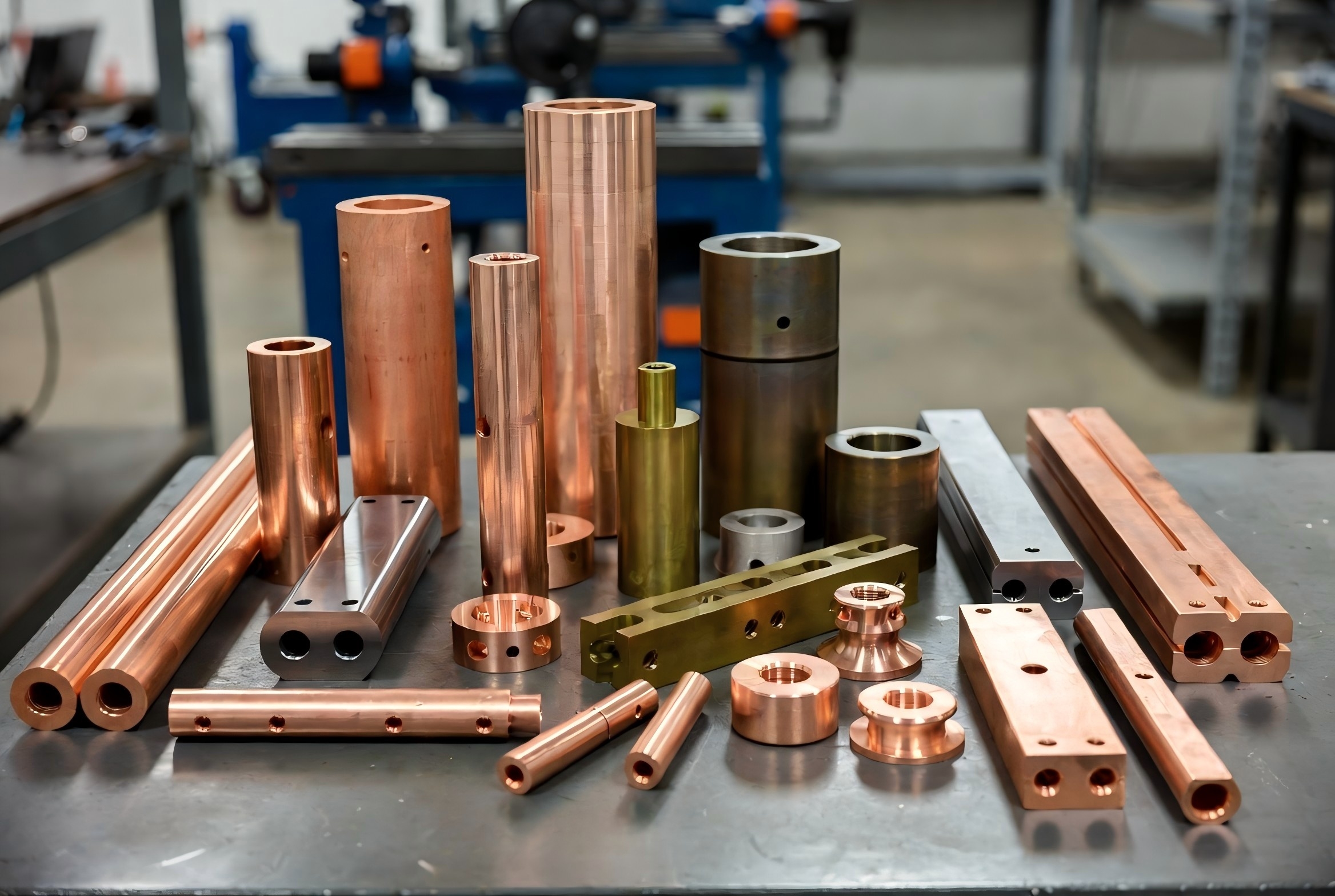
When you decide on the right alloy, we can usually ship quickly from stock. Explore our full detailed product range on the Product Details Page or visit our CYMBER Zhejiang Large-Scale Copper & Aluminum Integrated Warehouse to see current stock levels in real time.
Final Thoughts
Choosing the right copper alloy for CNC machining isn’t about picking the “best” material — it’s about picking the one that perfectly matches the customer’s real requirements. When you balance conductivity, strength, corrosion resistance, machinability, and cost correctly, the part not only works — it works better and lasts longer than expected.
If you have a drawing or a new project and you’re not sure which copper alloy is the right fit, send it my way. I’ll give you straight, no-nonsense advice based on what we’ve seen work (and what hasn’t) in the real world.
Ready to talk? Download our latest copper alloy selection guide or reach out anytime.
Download 2026 Copper Alloy Selection Guide (PDF)
Contact Us for Material Recommendation Support
Post time: Mar-31-2026