
Published: April 5, 2026
By: Yanwei Hu, Aluminum Alloys Technical Expert at Cymber Metal
Good morning everyone,
Yanwei Hu here from Cymber Metal.
I’ve been machining and testing pure copper for years, and nothing frustrates engineers more than a part that tests great in the lab but suddenly shows higher resistance or heat buildup once it’s in the field. Most people blame the design or the environment, but in many cases the real culprit is one of three hidden factors that almost never show up on a standard material certificate.
Today I’ll share the three most common “silent killers” of pure copper conductivity that I see on the shop floor, why they happen, and exactly what to look for when you’re sourcing material so you don’t get caught off guard.
1. Invisible Surface Oxidation and Contamination During Storage and Handling
This is by far the most common issue I see. Pure copper oxidizes incredibly fast once it leaves a controlled environment. Even a thin, almost invisible oxide layer or a trace of cutting oil left on the surface can increase contact resistance dramatically.
In high-current busbars or connectors, that extra resistance turns into heat, which then accelerates further oxidation — a vicious cycle. We’ve had customers who received “perfect” C11000 busbars that tested fine in the lab but overheated in service because the material sat in a humid warehouse for a few weeks before shipping.
How to avoid it: Always request material that has been vacuum-packed or protected with a proper anti-tarnish coating. At Cymber Metal we store our pure copper in climate-controlled areas and apply protective film immediately after machining.
2. Trace Impurities from Secondary (Recycled) Copper Sources
Many suppliers use recycled copper to keep costs down. While the overall purity may still meet 99.90% or 99.95%, tiny amounts of iron, sulfur, or other tramp elements can scatter electrons and reduce conductivity by 2–5% — enough to cause problems in high-current applications.
This is especially sneaky because the material certificate often only shows “Cu ≥ 99.90%” without detailing the specific impurities. In our own testing, we’ve seen batches from different mills that looked identical on paper but performed noticeably differently in conductivity tests.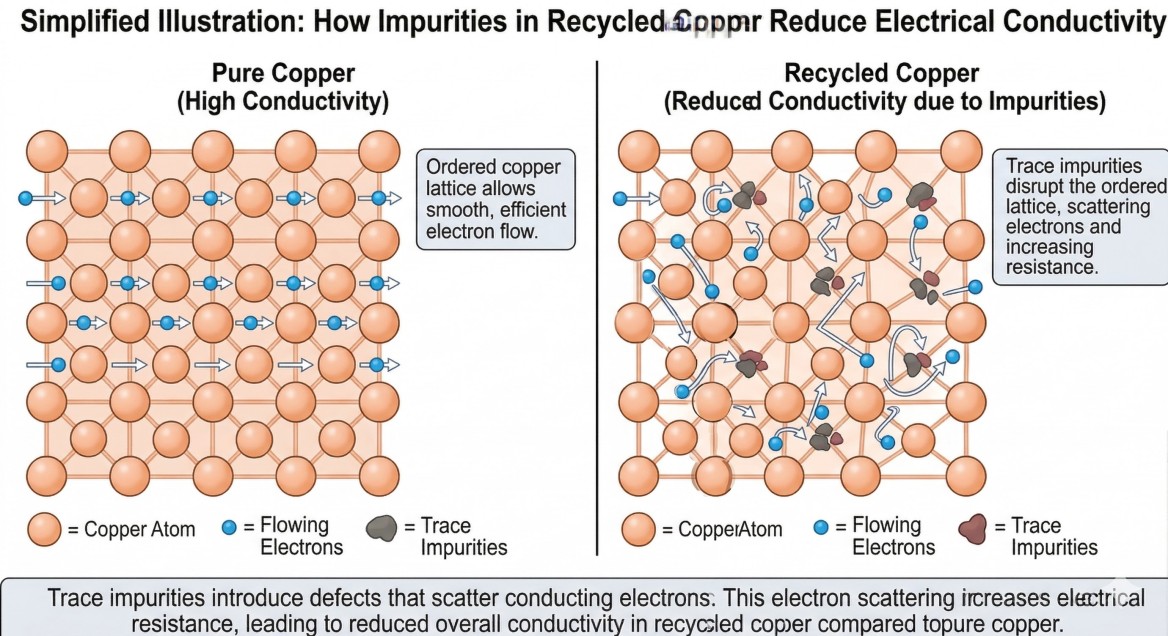
How to avoid it: Ask for the full elemental analysis report, not just the minimum copper percentage. We always provide detailed composition reports for every batch of pure copper we ship.
3. Improper Annealing or Work-Hardening That Disrupts Grain Structure
Pure copper’s conductivity depends heavily on its grain structure. If the material is over-worked during rolling or drawing and not properly annealed afterward, the grains become distorted and conductivity drops.
We’ve seen this happen with busbars that were cold-drawn to tight tolerances without a final soft anneal. On paper the material was 99.95% pure, but in practice the conductivity was 3–4% lower than expected.
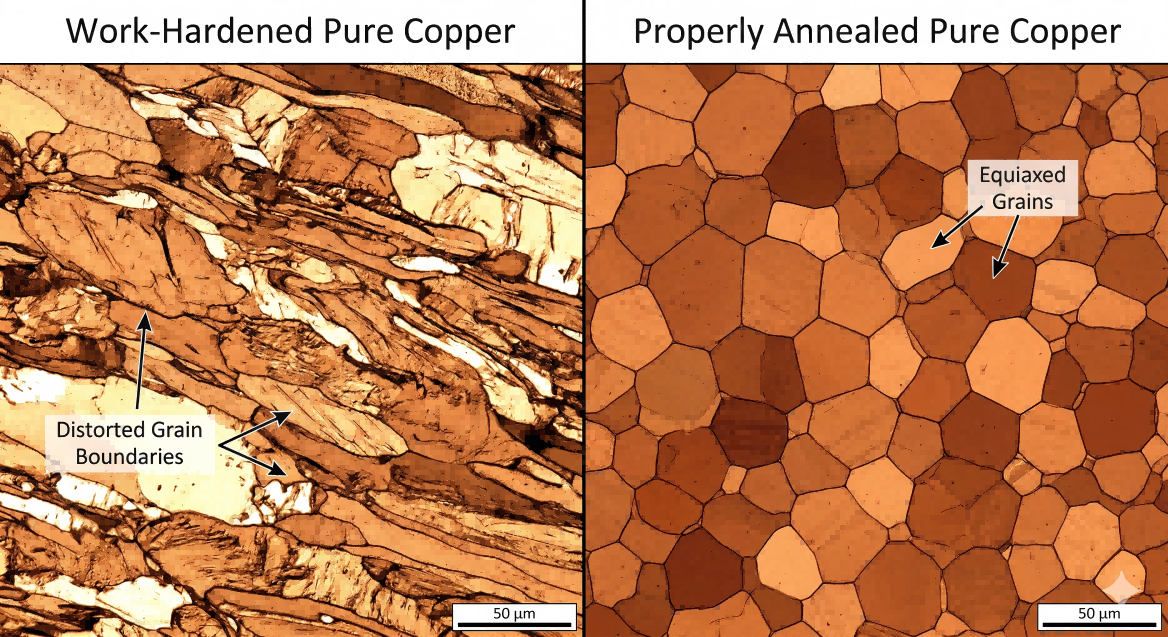
How to avoid it: Always specify the temper and annealing condition you need (usually “soft annealed” or “O60” for maximum conductivity). We can supply material in the exact temper required for your application.
How to Protect Yourself When Procuring Pure Copper
Here’s the simple checklist I give every engineer who asks me this question:
- Request full elemental analysis, not just “Cu ≥ 99.90%”.
- Ask for storage and packaging details — vacuum or anti-tarnish protection is a must.
- Specify the exact temper and annealing condition you need.
- Work with a supplier that can show you real conductivity test reports for every batch.
At Cymber Metal we keep all of this information transparent and readily available for every order.
You can explore our full range of pure copper products on the Pure Copper Product Page or visit our CYMBER Red Copper Bar & Busbar Core Warehouse to see current stock levels in real time.
Final Thoughts
Pure copper conductivity problems are rarely caused by the alloy itself — they’re almost always caused by hidden factors that most procurement teams never think to check. A few extra questions upfront can save you weeks of troubleshooting and thousands in replacement costs.
If you have a high-current project and you’re worried about conductivity drop, send me the drawing or your requirements. I’ll give you straight, no-nonsense advice based on what we’ve seen work (and what hasn’t) in the real world.
Ready to talk? Download our latest pure copper technical guide or reach out anytime.
Download 2026 Pure Copper Technical Guide (PDF)
Contact Us for Pure Copper Material Support
Post time: Apr-05-2026